
The short answer
SmartFix HVAC Repair Service repairs central air conditioners and heat pumps in Miami Beach homes and condos in ZIP codes 33139, 33140, and 33141. We diagnose the cause first, often salt-air corrosion, drain clogs, or worn electrical parts, then explain your options before doing any work.
When your air conditioner stops cooling in Miami Beach, it rarely picks a convenient moment. SmartFix HVAC Repair Service sends technicians from our base in Coral Gables, about 9 miles southwest, to homes and condos across ZIP codes 33139, 33140, and 33141. We find the actual cause, explain it in plain terms, and fix it, whether it's a failed capacitor, a clogged condensate line, or a refrigerant leak. Below are the problems we see most in Miami Beach homes and what to expect when we come out.
Why Miami Beach Air Conditioners Work So Hard
Miami Beach has a tropical monsoon climate. From May through October, the wet season brings heavy humidity and frequent afternoon thunderstorms. November through April is sunnier and less humid, but it's still warm enough that most homes run the AC for most of the year. Your system rarely gets a long rest, so small problems grow into breakdowns faster here than in cooler places.
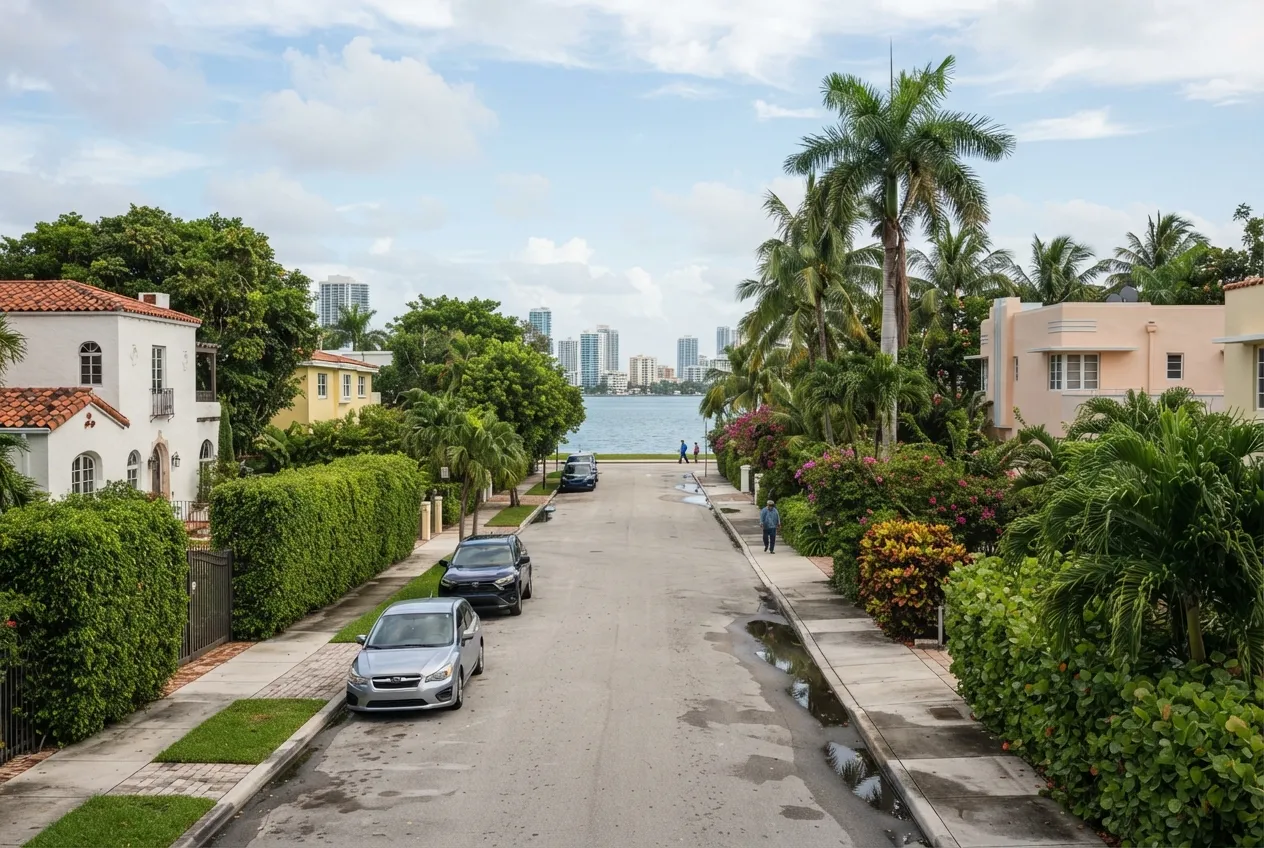
Living between the ocean and Biscayne Bay adds another factor: salt air. Salt settles on outdoor condenser coils, fins, and electrical connections and speeds up corrosion. Corroded coils move heat poorly, and corroded terminals can cause intermittent shutdowns that are hard to pin down without testing. Outdoor units on balconies, rooftops, or close to the water usually show it first.
Common AC Repairs We Handle in Miami Beach
Most of our Miami Beach calls fall into a handful of categories. Many share the same root causes: constant run time, high humidity, and salt exposure.
- Clogged condensate drain lines that trip the float switch, shut the system off, or leak water into closets and ceilings
- Failed capacitors and contactors that keep the compressor or fan from starting
- Refrigerant leaks, including leaks in corroded coils, that leave the system running but not cooling
- Frozen evaporator coils caused by low airflow, dirty filters, or low refrigerant
- Outdoor fan motor failures that make the condenser overheat and shut down
- Corroded wiring and terminals behind intermittent or random shutdowns
- Thermostat and control problems that keep the system from cycling correctly
- Air handler issues in condo closets, including weak blowers and rusted drain pans
What Happens During a Repair Visit
Our technician starts by asking what you've noticed: warm air, water on the floor, strange noises, or a system that won't turn on. Then we check the thermostat, air handler, drain line, electrical components, and outdoor unit. We measure temperatures and pressures rather than guessing, because several different failures can look the same from inside the house.
Before any work begins, we tell you what we found, what the repair involves, and whether anything else looks close to failing. If a part is worn but still working, we'll say so and let you decide. For condo owners, we can work around building access rules and tell you what your association may need to know about equipment on a roof or balcony.
AC Repair Around Hurricane Season
The Atlantic hurricane season runs from June 1 to November 30, overlapping the hottest, most humid part of the year. Storms bring power outages, surges when power comes back, wind-blown debris, and sometimes flooding around ground-level equipment.
If your outdoor unit sat in standing water, don't turn the system back on until it has been inspected. Water in electrical components can cause serious damage or create a safety hazard. After a storm, we check for bent fins, debris in the condenser, damaged electrical parts, and drain lines clogged by dirt or plant matter.
When Repair Stops Making Sense
Most AC problems are worth repairing. But when an older system has a major failure, such as a compressor or a badly corroded coil, replacement may be the better use of your money. We'll walk through the age of your equipment, how often it has needed repairs, and what the fix involves so you can make the call.
If you replace, Florida Power & Light runs a Residential HVAC program with rebates on qualifying high-efficiency central air conditioners and heat pumps, applied through participating contractors at installation. We confirm the current program terms before quoting them. The federal Energy Efficient Home Improvement Credit for heat pumps applied only to systems placed in service before December 31, 2025, so it doesn't cover new installations now.
More services in Miami Beach
- Heating Repair in Miami Beach
- Heat Pump Installation in Miami Beach
- AC Installation in Miami Beach
- Furnace Repair in Miami Beach