
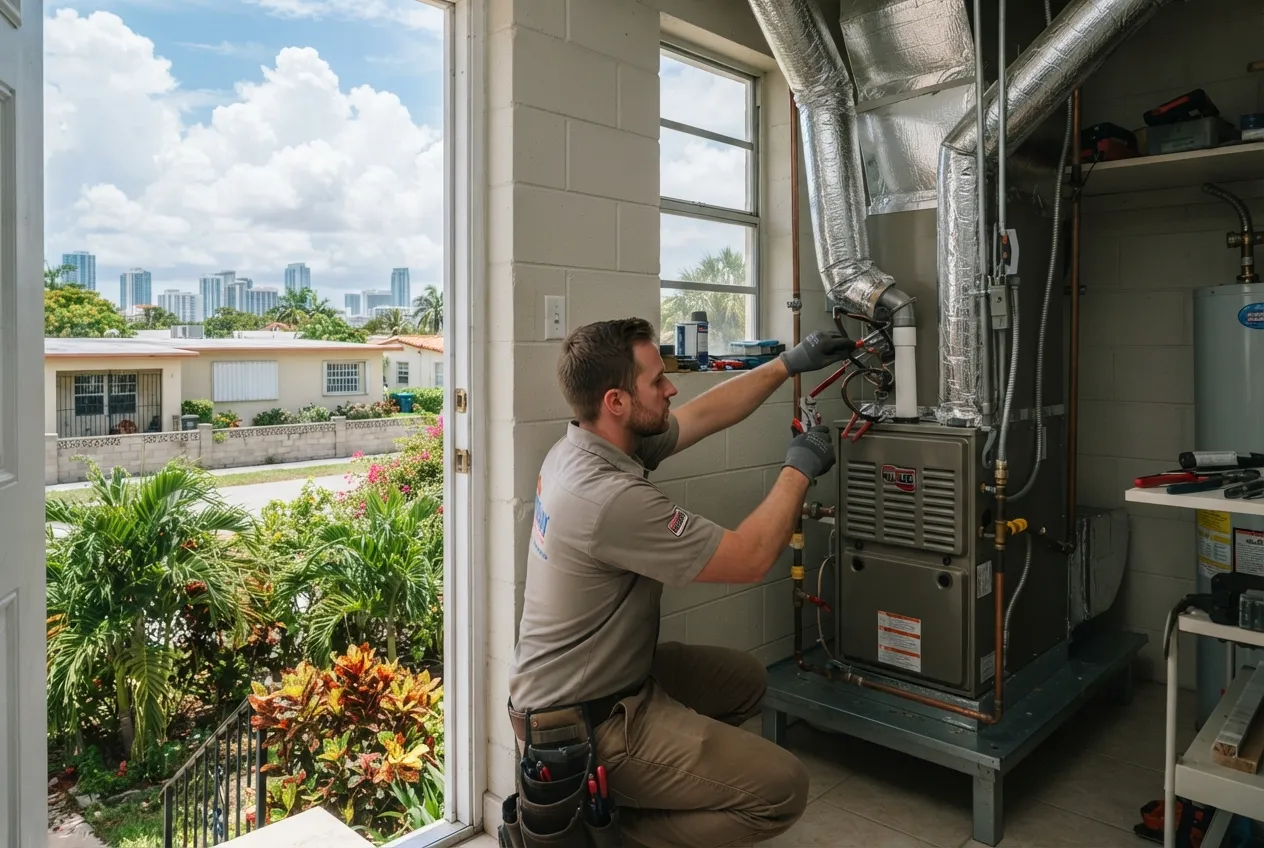
The short answer
Most Coral Gables homes heat with electric strips or a heat pump rather than a traditional furnace, so a new installation often means updating the air handler or switching to a heat pump. We inspect your equipment, ductwork, and electrical first, then give you written repair and replacement options before any work begins.
In Coral Gables, "furnace" usually means something different than it does up north. Most local homes don't have a gas-fired furnace in a basement. Heat usually comes from electric heat strips inside the air handler or from a heat pump. Some homes have a small gas or electric furnace paired with central air conditioning. Because the heating side runs only on a handful of cool days each year, problems often go unnoticed until the first cold front arrives. SmartFix HVAC Repair Service installs and replaces heating equipment for homeowners in Coral Gables and nearby areas such as South Miami, Coconut Grove, and Miami. This page covers when replacement makes sense, what we look at, your options, and what to expect from a visit.
Signs It's Time to Replace Your Heating System
Heating equipment in South Florida often sits idle for months and then has to work on a chilly morning. That stop-and-start pattern can wear out parts in ways you won't notice until you need heat. Humidity and salt air near the coast add to the wear. These are the signs homeowners mention most often:
One warning needs its own note. If you have a gas furnace and smell rotten eggs, leave the house and call your gas utility from outside before you call us.
- A burning smell that doesn't go away after the first few minutes of running
- Heat that turns on but never warms the house, or warms only some rooms
- Breakers that trip when the heat strips come on
- Rust or corrosion on the cabinet, coil, or heating elements
- The same repair coming back every winter
- Equipment old enough that replacement parts are hard to find
What We Check Before Recommending Installation
A good installation starts with understanding the house, not just the old unit. Before we recommend any equipment, a technician looks at:
We also ask how you actually use heat. Some households run it only a few mornings each winter. Others have someone at home who needs steady warmth. Your answer helps decide whether a simple heat strip replacement is enough or whether a heat pump makes more sense.
- Your current heat source (electric strips, heat pump, or gas furnace) and how it's matched to the cooling system
- Electrical capacity, breaker sizing, and wiring condition for the heating load
- Ductwork condition, air leaks, and insulation, especially in hot attics
- The air handler location, drain lines, and any signs of water damage around the cabinet
- Room-by-room comfort problems you've noticed
- Your thermostat, and whether it can properly control new equipment
Repair or Replace: Your Options
Not every heating problem calls for new equipment. A failed sequencer, a burned-out heating element, a bad relay, or a loose connection can often be repaired. When a repair is the reasonable choice, we'll tell you.
Replacement starts to make sense when the heating section is part of an aging air handler, when major parts are corroded, or when the cooling side is also near the end of its life. In most South Florida homes, heating and cooling share the same air handler and ductwork, so it's often practical to look at both together. Common options include:
Heat pumps are a common upgrade here. They heat efficiently during mild winter weather and handle cooling the rest of the year. We'll explain the trade-offs for your home rather than push a single answer.
- Repair the existing heating parts and keep your current system running
- Replace the heat strip kit or the air handler and keep the outdoor unit
- Replace the full system with a heat pump that handles both cooling and heating
- Replace a gas furnace with a new gas furnace where gas service is already in place
What Affects the Cost of a New System
We don't quote prices without seeing the home, because the variables make a real difference. The main factors are:
Florida Power & Light runs a Residential HVAC program that offers rebates on qualifying high-efficiency central air conditioners and heat pumps. The rebates are delivered through participating contractors at the time of installation. Program terms can change, so we confirm the current details before including them in any quote. The federal Energy Efficient Home Improvement Credit used to apply to qualifying heat pumps, but it only covered systems placed in service before December 31, 2025. It isn't available for new installations now.
- The type of equipment: heat strips, heat pump, or gas furnace
- System size and efficiency level
- Whether we replace the air handler, the outdoor unit, or both
- Ductwork repairs or changes
- Electrical upgrades needed to support the new equipment
- How easy the equipment is to reach, such as a tight closet or an attic
- Permits and inspections required by your local building department
How an Installation Visit Works
First, we schedule a time to see your home and talk through what's been happening. The technician inspects your current equipment, ductwork, and electrical, then explains what we found in plain terms.
Next, you get your options in writing. If installation is the right call, we go over equipment choices, what the work involves, and how long it should take. Nothing starts until you approve it.
On installation day, the crew protects your floors and work areas and removes the old equipment. Then they install and connect the new system and test both heating and cooling. Before we leave, we show you how to use the thermostat and change the filter.
A note on timing: in the Miami area, including nearby Miami Beach, the wet season runs from May through October and air conditioning runs most of the year. Hurricane season runs from June 1 to November 30. Many homeowners like to plan heating and air handler work during the drier months, from November through April, when the system is under less strain.