
The short answer
If your AC is blowing warm air, running constantly, leaking water, or making new noises, a repair visit is usually the right next step. A technician diagnoses the cause, explains your options in plain terms, and gets your approval before doing any work.
When your air conditioner stops keeping up, the house gets uncomfortable fast. Humidity creeps in and sleep gets harder. SmartFix HVAC Repair Service repairs central air conditioners and heat pumps for homeowners in Coral Gables and nearby communities across Miami-Dade. This page covers the warning signs worth acting on, what our technicians check during a visit, how to weigh repairing against replacing, what affects the cost of a repair, and what to expect from the time you contact us until the system is running again.
Signs Your Air Conditioner Needs Repair
In South Florida, air conditioning runs for most of the year. Across the area, May through October brings heat, heavy humidity, and frequent afternoon thunderstorms. November through April is drier, but systems still run often. That steady workload means small problems tend to grow quickly. Catching them early can keep a minor fix from becoming a major one.
Call for service if you notice any of the following:
- The system runs but blows warm or lukewarm air
- The AC runs almost nonstop and the house never reaches the thermostat setting
- Rooms feel damp or clammy even when the air is cool
- Water pooling near the indoor unit, or a drain line that keeps backing up
- Ice on the refrigerant lines or the indoor coil
- Grinding, squealing, rattling, or buzzing sounds that weren't there before
- The outdoor unit hums but the fan doesn't spin
- The system turns on and off in short, frequent cycles
- Breakers trip when the AC starts
- Musty or burning smells from the vents
- Electric bills rising with no change in how you use the system
What We Check During an AC Repair Visit
A good repair starts with a real diagnosis, not a guess. Our technician looks at the whole system. A symptom like warm air can come from several different causes, and replacing the wrong part wastes your time and money.
Depending on the problem, a typical inspection includes:
- Thermostat settings, wiring, and power supply
- Capacitors, contactors, and relays that start the compressor and fan motors
- Outdoor condenser coil, fan motor, and fan blade
- Indoor evaporator coil and blower motor
- Refrigerant pressures and temperature readings, plus signs of a leak
- Condensate drain line, drain pan, and float switch
- Air filter condition and airflow through the return and supply vents
- Visible ductwork for disconnected sections or obvious leaks
- Electrical connections for corrosion, loose terminals, or heat damage
Repair or Replace: Weighing Your Options
Most AC problems can be repaired. A failed capacitor, a clogged drain line, or a worn contactor is usually a straightforward fix. Replacement becomes worth discussing when a major component fails on an older system, when repairs keep happening, or when the unit can no longer keep the house comfortable on hot, humid days.
We'll walk you through both paths and leave the decision to you. Factors worth considering include the age and overall condition of the system, how often it has needed service, whether the failed part is still easy to get, the refrigerant the system uses, and how comfortable and efficient the house has been.
If you're leaning toward replacement, ask about Florida Power & Light's Residential HVAC program. It offers rebates on qualifying high-efficiency central air conditioners and heat pumps, delivered through participating contractors at the time of installation. We confirm the current program terms before discussing them with you. Please note that the federal Energy Efficient Home Improvement Credit for qualifying heat pumps covered systems placed in service before December 31, 2025. It isn't available for new installations after that date.
What Affects the Cost of an AC Repair
Every repair is different, so the cost depends on what the technician finds. Here are the main factors that affect the cost:
- The specific part that failed and whether it's a common or specialty component
- Whether the problem is electrical, mechanical, refrigerant-related, or drainage-related
- Finding and repairing a refrigerant leak, which can take more time than replacing a part
- The type, brand, and age of your equipment
- Where the equipment is installed, such as a tight closet, attic, or rooftop
- Whether more than one issue is contributing to the problem
- Timing of the visit, including evenings, weekends, or busy stretches of the year
How an AC Repair Visit Works
When you contact us, we'll ask what you're noticing, how long it has been happening, and what kind of system you have. That helps the technician arrive prepared. We'll set a time for the visit and let you know when we're on the way.
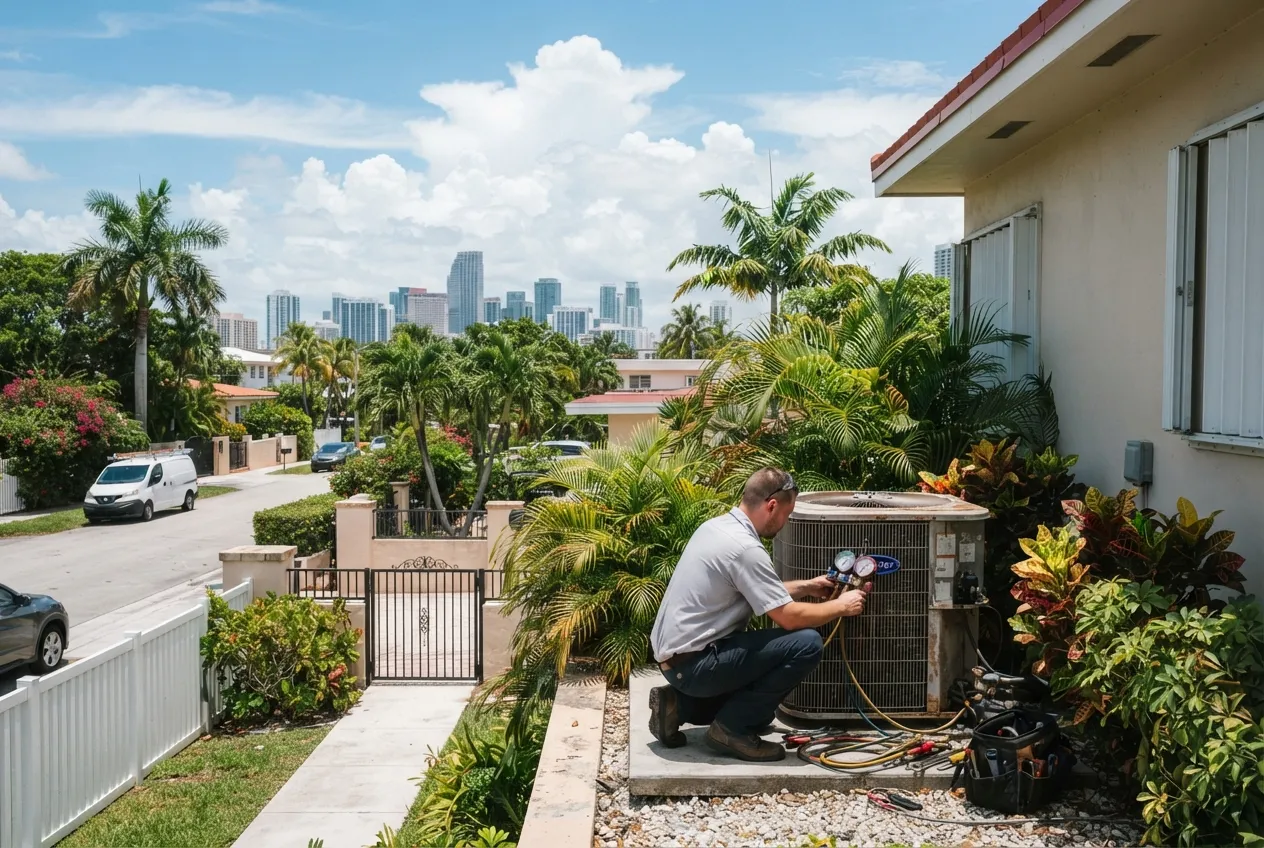
On site, the technician asks a few follow-up questions, inspects the system, and runs the diagnostic checks described above. Next, they explain what they found in plain language. This covers what's wrong, what it will take to fix it, and any other options. No work begins until you approve it.
After the repair, the technician runs the system and confirms it's cooling and draining properly. They'll also point out anything worth keeping an eye on. Hurricane season runs from June 1 to November 30. If your outdoor unit has been through a storm, we can check for debris, water exposure, and electrical problems before or after you turn the system back on.