
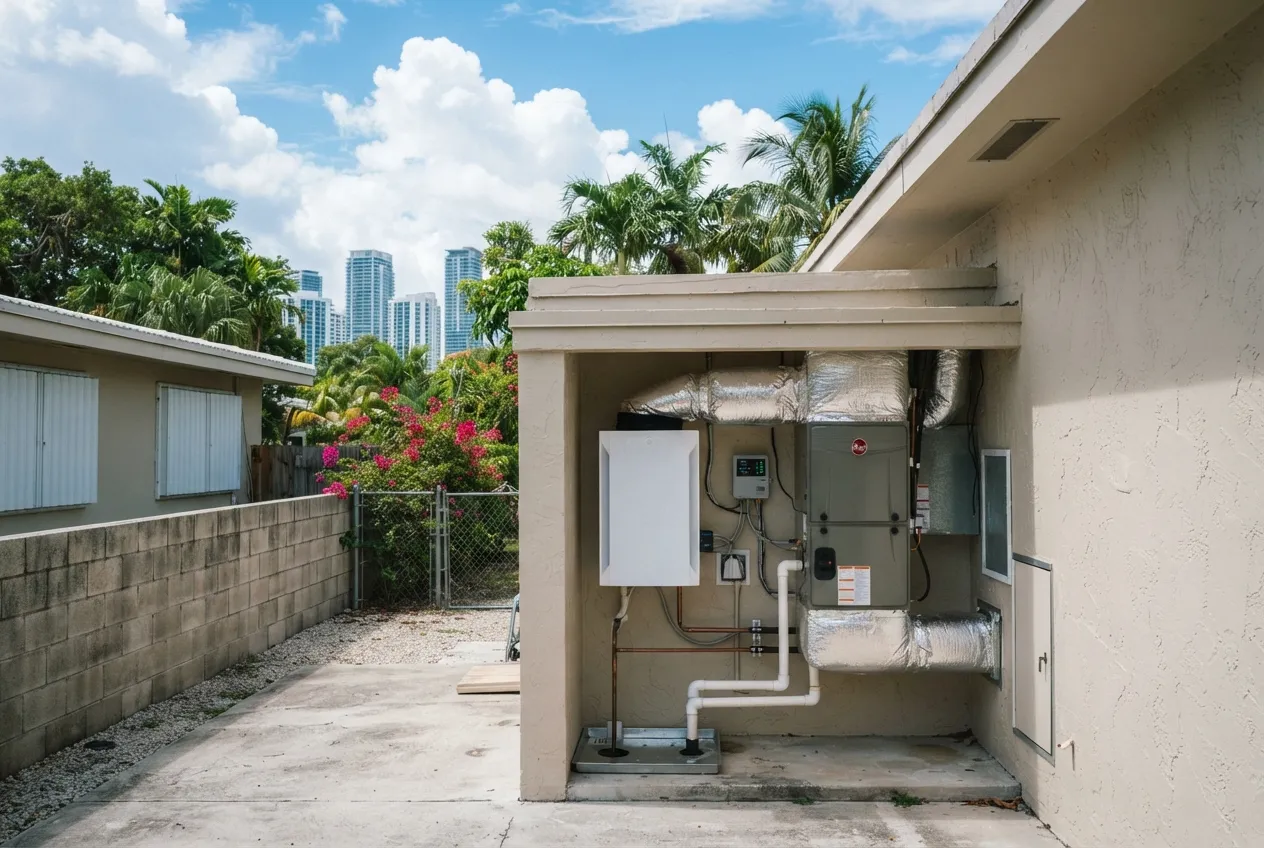
The short answer
If your home smells musty, feels sticky, or gets dusty fast, your HVAC system is likely the cause, and an indoor air quality check can find out why. We inspect filters, coils, drains, humidity, and ductwork, then explain repair, upgrade, and replacement options so you can choose what fits your home.
In Coral Gables, your air conditioner does more than cool the house. It pulls moisture out of the air, moves your indoor air through a filter, and runs for most of the year. When part of that system falls behind, you notice it as musty smells, sticky rooms, dust that returns a day after cleaning, or allergies that flare up indoors. SmartFix HVAC Repair Service inspects the parts of your HVAC system that shape the air you breathe: filtration, humidity control, ductwork, drainage, and ventilation. Then we explain what we find in plain terms. We serve homeowners in Coral Gables and nearby cities, and we'll tell you what's worth fixing, what can wait, and when replacement makes sense.
Signs Your Home Needs an Indoor Air Quality Check
South Florida homes deal with heat and humidity nearly year-round. Like nearby Miami Beach, Coral Gables has a wet season from May through October, with frequent afternoon thunderstorms, and a sunnier, less humid stretch from November through April. Because air conditioning runs for most of the year here, small problems with moisture, drainage, and airflow have plenty of time to grow.
Storms are another trigger. The Atlantic hurricane season runs from June 1 to November 30, and a long power outage can leave a closed-up house without cooling or dehumidification for days. If your home sat warm and humid after a storm, or water got into the attic, garage, or walls near the air handler, have the system and ducts checked before mold has a chance to spread.
- A musty or damp smell when the system turns on
- Air that feels sticky even when the thermostat says the house is cool
- Dust building up quickly on furniture, vents, or the return grille
- Dark spots or visible growth on supply registers, the air handler, or nearby ceilings
- Allergy or sinus symptoms that seem worse inside the house than outside
- Condensation on vents, windows, or ductwork
- Rooms that feel stuffy or never seem to get fresh air
- Water around the air handler or a drain line that backs up
What We Check During an Indoor Air Quality Visit
An indoor air quality visit focuses on how your HVAC system handles air, moisture, and contaminants. We look at the equipment and the house together, because a clean filter can't make up for a leaky duct pulling attic air into your living space.
We show you what we find, with photos when that helps, so you can see the problem yourself instead of taking our word for it.
- Filter type, fit, and condition, including gaps that let air bypass the filter
- Evaporator coil and blower wheel for dirt buildup, which restricts airflow and can harbor growth
- Condensate drain pan, drain line, and safety switch for clogs, standing water, and slime
- Indoor humidity and how well the system removes moisture during normal run cycles
- Ductwork for leaks, disconnected sections, crushed runs, and damaged insulation, especially in the attic
- Return air paths, including whether closed doors cut off airflow to some rooms
- Supply registers and grilles for dust, rust, and moisture
- Signs of short cycling or sizing problems that hurt humidity control
- Existing air cleaners, UV lights, or dehumidifiers, if you have them, to confirm they work as intended
Repair, Upgrade, or Replace: Your Options
Many air quality problems come down to repairs and maintenance. Clearing a clogged drain line, cleaning a dirty coil and blower, sealing duct leaks, reconnecting loose duct sections, or installing a filter rack that actually seals can make a noticeable difference without new equipment.
Some homes benefit from upgrades added to the existing system. Options include higher-efficiency media filters, a whole-home dehumidifier for houses that stay damp even with the AC running, UV lights near the coil, and fresh-air ventilation for tightly sealed homes. We recommend these only when the inspection points to a problem they actually solve.
Replacement comes into the conversation when the equipment itself is the source of the problem. Examples include an oversized system that cools quickly but never runs long enough to dry the air, a badly corroded coil, an air handler with ongoing water damage, or ductwork that is too far gone to repair. If you replace a central air conditioner or heat pump with a qualifying high-efficiency model, Florida Power & Light's Residential HVAC program may offer a rebate through participating contractors at the time of installation. We confirm the current program terms before including them in any quote. The federal Energy Efficient Home Improvement Credit for heat pumps only applied to systems placed in service before December 31, 2025, so it does not cover new installations now.
What Affects the Cost
Every home is different, so we quote after we've seen your system. These are the main factors:
We lay out your options side by side so you can weigh what each one fixes against what it costs before you decide.
- Whether the fix is cleaning and repair or new equipment
- Access to the air handler and ducts, such as tight closets, low attics, or ceiling-mounted units
- How much ductwork needs sealing, repair, or replacement
- How much moisture damage or visible growth needs cleanup around the equipment
- The type of add-on you choose, such as a filtration upgrade, dehumidifier, or ventilation system
- Electrical or drainage work needed to support new components
- The size of your home and the number of systems serving it
How an Indoor Air Quality Visit Works
We serve Coral Gables and nearby cities. If your home feels damp, dusty, or stale, schedule a visit and we'll help you find out why.
- You tell us what you're noticing, such as smells, humidity, dust, health symptoms, or recent storm damage.
- A technician arrives, asks a few questions, and inspects the air handler, coil, drain, filter, and accessible ductwork.
- We check humidity and airflow while the system runs.
- We walk you through what we found and explain repair, upgrade, and replacement options in plain language.
- You decide what, if anything, to do. Many repairs can be handled during the same visit when parts are on hand.
- We suggest simple habits, like regular filter changes and keeping the drain line clear, to help keep your air cleaner between visits.